CopyCat Designers

It’s no secret that designers often get knocked off by other companies. For hundreds of years, people have created designs only to have them ripped off by other designers for a cheaper price.
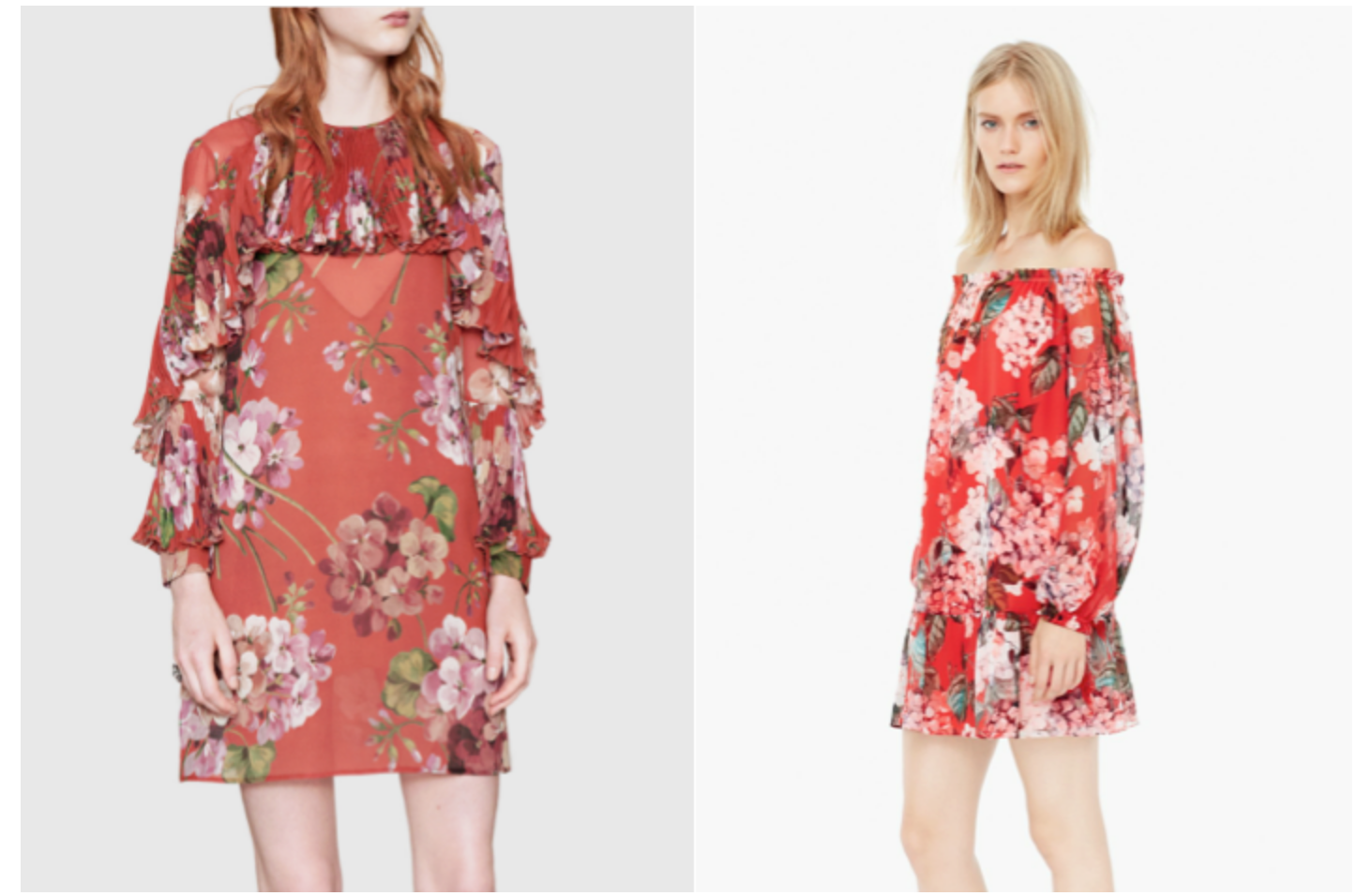
Left is a piece from Gucci’s Fall/Winter 2015. Right is a similar piece from fast fashion company Mango. http://www.thefashionlaw.com/home/mango-copied-gucci-and-its-really-bad

Luxury high-end designers often fall victim to this because of their high prices and exclusivity. Cheaper companies usually recreate a similar design at a much lower price point so more people have access to it while they also make money for taking someone else’s idea. At the same time, this knocks the credibility and exclusivity of high end designers because the whole point of it being high end is so that only the few who could afford it could wear it. For years companies have been dodging loopholes regarding copyrights and continue to copy designs from popular brands to further their own brand.

Big companies have also been accused on many instances of stealing designs from smaller brands. One instance that I witnessed go down on Instagram is from NYC Designer, Selangie Arlene. She is a local artist that creates all her designs herself and has gained popularity through her aesthetically pleasing Instagram account, @sel.doval. Recently she launched a bikini line which she describes as, “redefined the micro bikini as the string tinikini.”

At first, she released a very small amount with limited stock. It quickly sold out and she soon released more in different colors. This did not stop companies from copying her iconic silhouette.
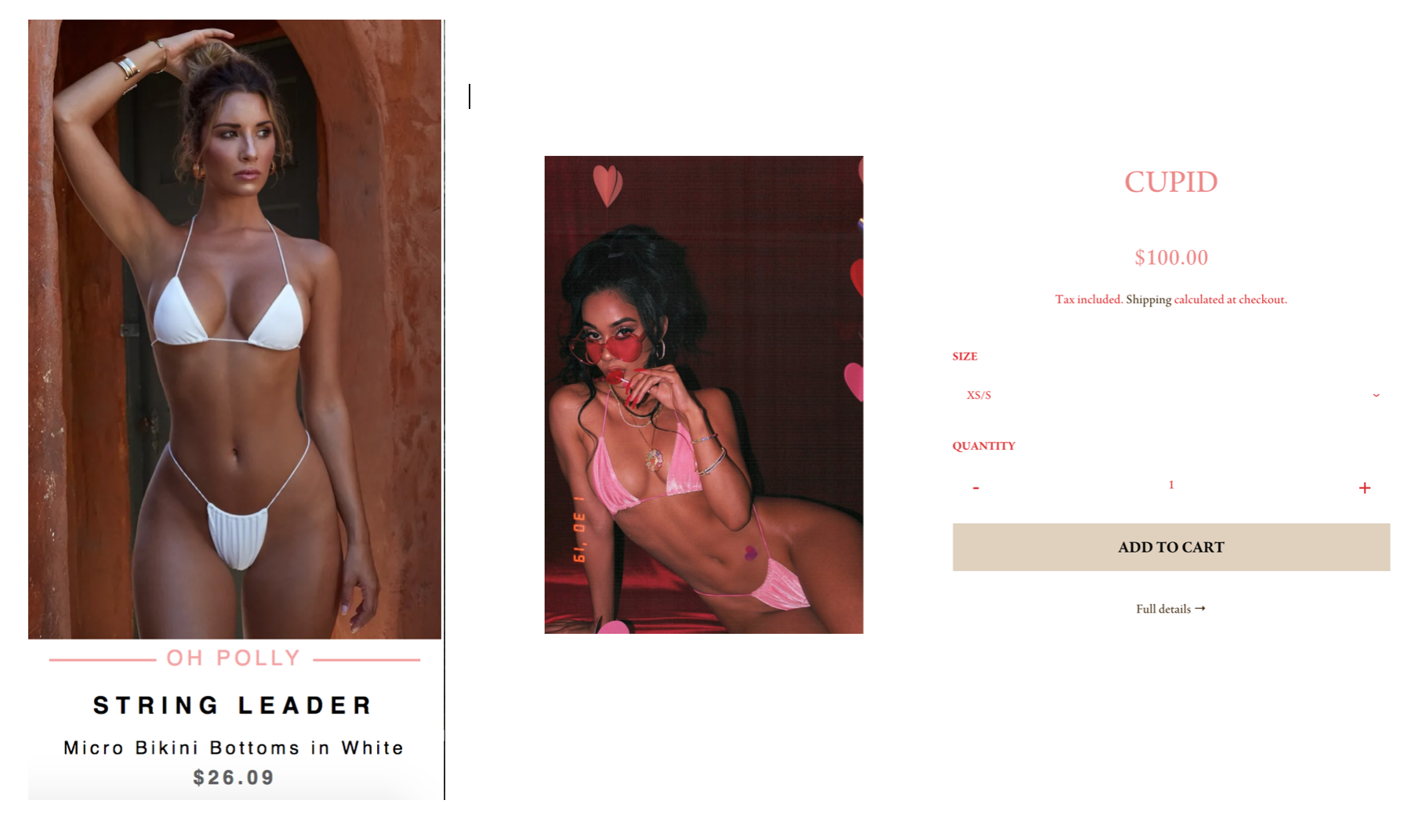
On the left is Oh Polly’s rendition of Sel Doval’s Tinikini as seen on the right.

As seen in the above picture, the similarities between the two are strikingly similar. Down to the micro strings on the sides and the cut of the bikini, it is clear that Oh Polly took this design from Doval. She addressed this controversy in a now deleted Instagram post calling the brand out for their swim designs. The brand did not respond and continues to sell this stolen design today on their website.

As shown, some fast fashion companies try to take the credit from hard working designers around the world. It is wrong for them to profit off the work of those that work hard for their creations. Companies should step up and pay reparations for what they took or simply create their own designs. To learn more about how to get out of the fast fashion cycle click here!
What is Fast Fashion?

If you have social media, I know you have seen an ad or two promoting a fashion company selling trendy styles. Websites such as FashionNova, PrettyLittleThing, MissGuided, and more all promote their trendy clothing on their Instagram and pay influencers to wear their clothes and tag them on their own pages. These companies make millions in revenue all based off of fast fashion. This is a term people may not have heard of but recognize what it is. According to Merriam-Webster:

“Fast Fashion is an approach to the design, creation, and marketing of clothing fashions that emphasizes making fashion trends quickly and cheaply available to consumers.”

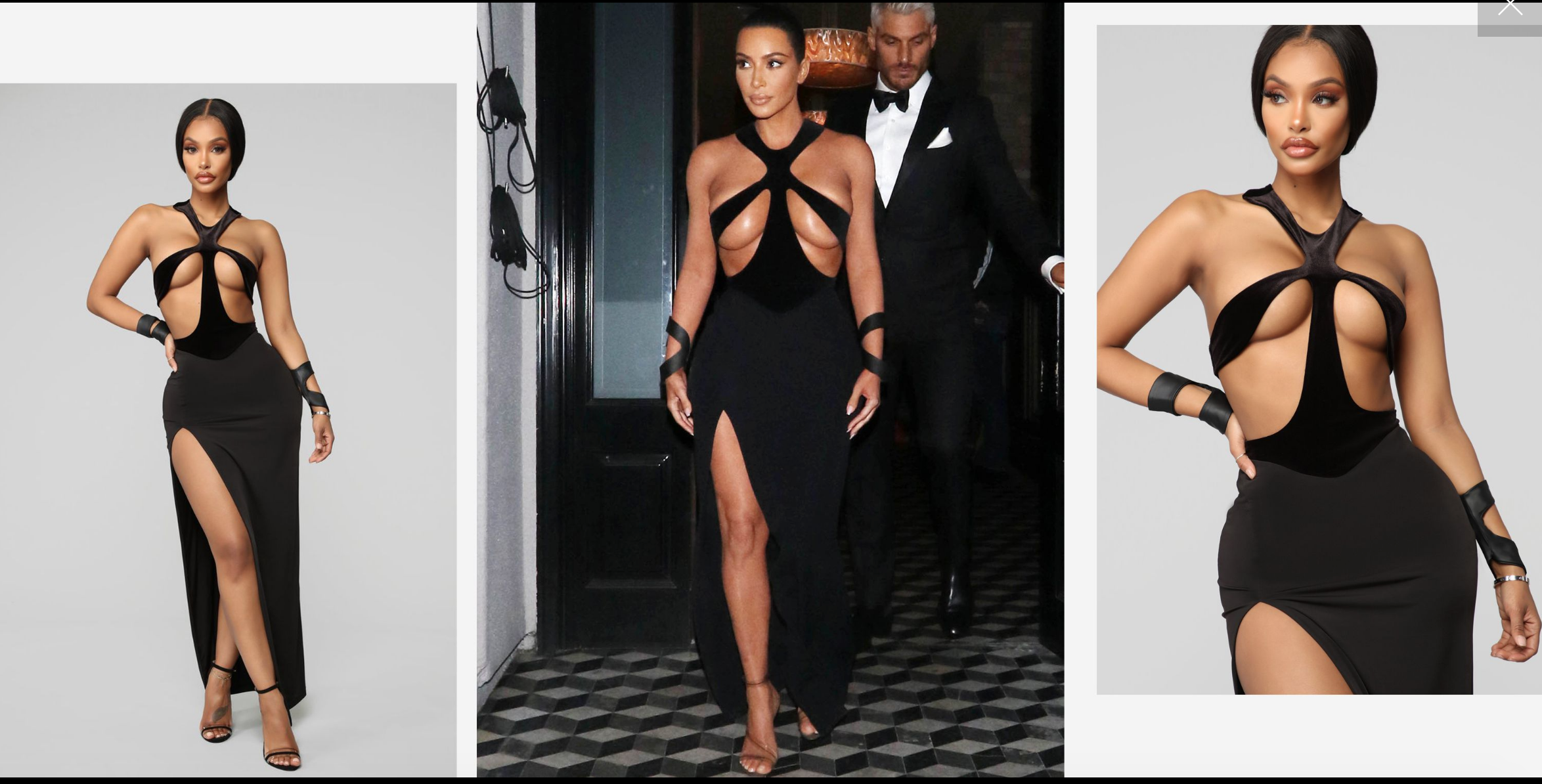
https://www.harpersbazaar.com/fashion/designers/a26428007/kim-kardashian-leaking-fashion-nova-knockoffs/
As recently as this week, Kim Kardashian posted a picture wearing this dress, and FashionNova was selling a replica on their website hours later.

These websites have the means to see influential people post an outfit and recreate something similar in hours to then sell it on their website at a cheap price. As a large company they are able to do this quickly while the item is still trending. This also raises the question of the ethics of the clothing. How are they able to design and produce these items so quickly? How are the items so inexpensive? But their millions of followers and consumers continue to buy their products and support these businesses.

Unfortunately, smaller businesses do not have the ability to do things like this. Smaller fashion designers focus on ethical manufacturing and use locally sourced products. Usually the owners design products and make them theirselves to then sell on their own websites. This usually takes longer and comes at a higher price. Consumers may not always want to pay this price so they turn to websites such as those mentioned above.

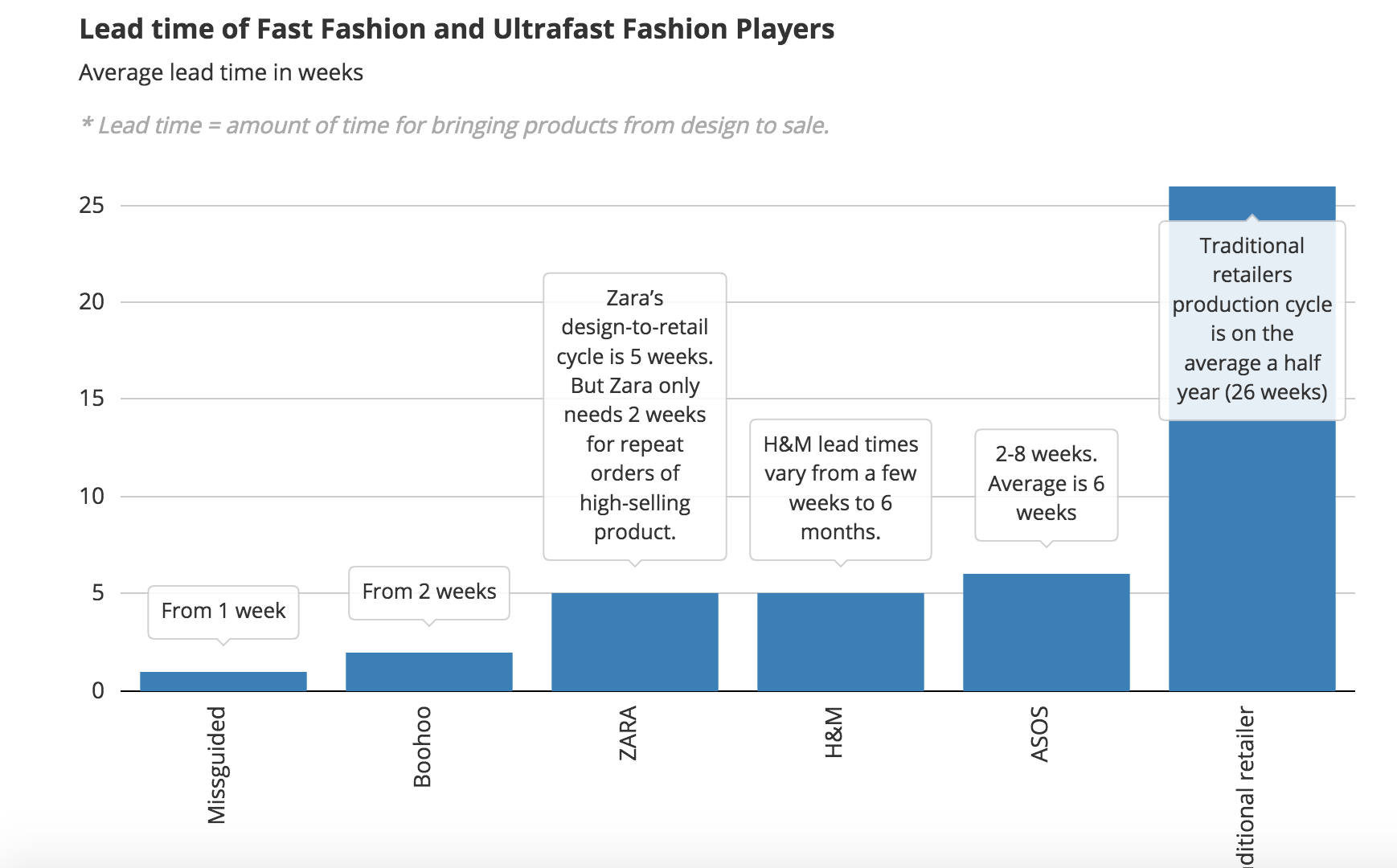
https://fashionunited.uk/news/fashion/boohoo-asos-missguided-pave-the-way-for-ultrafast-fashion/2017052424625
This graph shows just how quickly popular fashion retailers can create and produce products compared to a traditional retailer.

Fast Fashion is not only a problem for the economy, but an even bigger problem for the Earth. This cycle of mass producing large amounts of clothing every other week to keep up with trends is creating massive amounts of waste. If people continue to support businesses like these, the fashion industry could be responsible for 25% of the Earth’s carbon budget by 2050.

Overall, fast fashion is clearly harming many of the aspects of our world. Social media posts and influencers have a large impact on the way that these brands have such a dominance over the fashion industry. These companies are growing stronger with the more popularity they gain, and they have no plans of stopping anytime soon.